
Re: Ms Z Saiyed v LHR Airports Ltd: 3300526/2024
There is a particular kind of employment case that arrives at the tribunal carrying more than the sum of its factual allegations. Saiyed v LHR Airports Ltd is one of them. Stripped to its bones, it is a discrimination claim by a security officer at Heathrow that failed on every count – eleven factual allegations, three legal heads, no findings of unlawful conduct. Told that way, it is unremarkable. But the case is worth reading, and worth writing about, precisely because of what sits underneath: an airport trying to hold a neutral line while a war half a world away pressed itself, daily, onto the lanyards, screens and social-media feeds of its workforce.
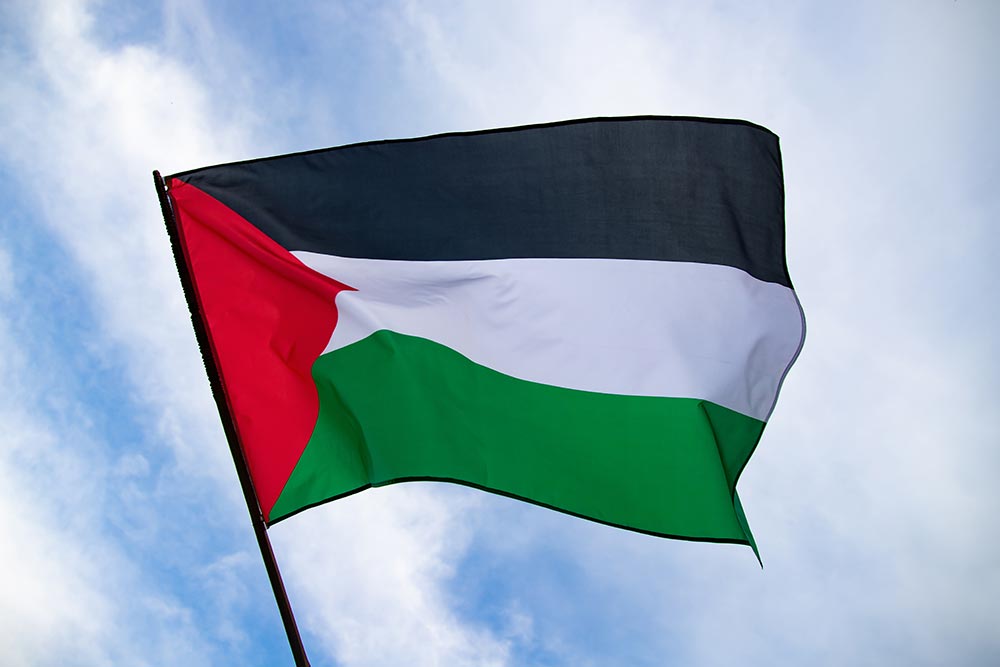
The claimant, Ms Saiyed, was a Muslim woman who, in her own words, saw Palestinians as family and considered herself perceived by many to be Palestinian. She began work at Terminal 2 on 9 October 2023 – two days after the Hamas attack on Israel of 7 October, an event the Tribunal placed squarely at the centre of the factual matrix. The catalyst for everything that followed was a confrontation on 26 November 2023, when a colleague challenged her for wearing a Palestinian flag badge. That single incident was not itself pleaded as discrimination; but the grievance she raised the next day, and everything the employer did – or failed to do – thereafter, became the substance of her claims.
What makes the case a genuinely interesting vehicle for legal discussion is the distinction it forces us to confront but never quite lets us settle: the difference between a political badge and a religious symbol, and whether the law treats – or should treat – the two differently when an employer reaches for the word “neutral”.
The claims, and why they all failed the same way
The pleaded architecture was conventional. Harassment related to race or religion under section 26 of the Equality Act 2010; direct discrimination on the same grounds under section 13, pleaded in the alternative; and victimisation under section 27. The eleven factual allegations under the harassment and direct-discrimination heads ranged from the handling of the November 2023 grievance, through the moderation, hiding or deletion of posts on the internal “Buzz” platform (Good Friday, Eid, Holocaust Memorial Day), a muting incident on a Microsoft Teams equality webinar, comments by a trainer about the claimant’s hijab and children, a no-notice meeting with two senior managers about her badge, an interview by security intelligence officers, and the non-posting of a Ramadan video. The victimisation claim separately relied on two alleged detriments: a deduction of pay and the security-intelligence interview.
The reason the alternatives are pleaded, rather than stacked, is statutory. Under section 212(1) of the Equality Act 2010 (General Interpretation), “detriment” does not include conduct which amounts to harassment. As the Tribunal correctly set out, that makes harassment and direct discrimination based on the same facts mutually exclusive: they can be run in the alternative, but the same conduct cannot be both. The conventional order is therefore to test harassment first, and only if it fails on the facts to move to direct discrimination.
For most of the eleven allegations the Tribunal followed a recognisable and disciplined pattern:
- Did the thing happen? Often, factually, yes – the post was hidden, the microphone was muted, the pay was docked, the meeting was held without notice.
- Was it related to (harassment) or because of (direct discrimination) race or religion? Almost always, no.
- Had the burden of proof shifted? Under section 136, the Tribunal repeatedly found the claimant had not established facts from which discrimination could be inferred – and that even if it had, there was a positive, non-discriminatory reason.
That structure is where the intellectual interest lives, because the recurring reason the claims failed was a single, elegant, and slightly ruthless distinction: context is not the same as reason.
Context is not cause: the Amnesty point
The doctrinal spine of the judgment is the distinction, drawn from Amnesty International v Ahmed [2009] ICR 1450, between the context in which treatment occurs and the ground or reason for it. The EAT there put it plainly: the fact that a claimant’s race is part of the circumstances, or of the sequence of events leading up to the treatment, does not necessarily mean it formed part of the reason for that treatment. That distinction maps most precisely onto direct discrimination, where the statutory question is whether treatment was “because of” the protected characteristic. For harassment, section 26 asks the subtly different question of whether the conduct was “related to” the characteristic – a test of connection rather than causation. In practice the Tribunal ran the two together, repeatedly finding that the claimant’s affiliation with Palestine supplied only the context, and that neither the reason for, nor any sufficient connection with, the conduct engaged race or religion.
The Tribunal deployed this repeatedly, almost as a refrain. Her affiliation to Palestine was part of the context of the muting on the Teams call – but the operative reason was enforcement of the “Global Conflict Policy”. It was the context of the Good Friday and Eid post allegations – but the reason was the Buzz keyword-and-reporting mechanism and the conflict policy. It was the context of the no-notice badge meeting – which itself arose from a Jewish colleague’s complaint about her Buzz comment – but the lack of notice was attributed to a genuine belief that she was about to go on leave, coupled with a non-approved item on her lanyard. It was even the context of the security intelligence interview – but the reason was that two SafeCall reports had been made and the employer was, on its evidence, duty-bound to investigate.
Here is where the case rewards a critical eye rather than mere summary. For direct discrimination, the “context is not cause” principle is orthodox and correct (for harassment, its analogue is that context alone need not establish the required relationship with the protected characteristic). But you might consider that its power is also its danger: applied mechanically, it can absorb almost any protected characteristic into “mere background” whenever an employer can point to a facially neutral policy. If a Palestinian flag badge is banned under a “no country flags” rule, the ban is “about” the rule, not the flag; and the flag’s meaning to a Muslim woman who identifies with Palestinians becomes context, not cause. The reasoning is legally impeccable. Whether it fully captures the lived experience of an employee for whom the badge and the identity are inseparable is a harder question – and one the Tribunal, to its credit, did not pretend away. It repeatedly acknowledged that the claimant’s affiliation was “part of the context”, and that her feelings “may very well have been real to her”, before explaining why that was not enough in law.
The badge and the hijab: the case’s central juxtaposition
The most fertile ground for discussion is the Tribunal’s treatment of the badge as against the hijab – because the claimant herself collapsed the two, and the Tribunal deliberately prised them apart.
In her escalating grievance correspondence of December 2023, the claimant wrote that demanding the removal of the Palestinian flag from her lanyard was “tantamount to finding my hijab offensive and insisting on its removal.” The Tribunal’s response is the doctrinal heart of the case:
“Objectively, at policy level, there is a difference between wearing a hijab (which is permitted) and wearing a badge (which is not permitted).”
This is the line on which the entire case turns, and it is worth considering more. In UK equality and human rights law, a hijab is ordinarily capable of being a manifestation of Muslim faith. Restrictions on it may engage Article 9 of the European Convention on Human Rights and may, on the right facts, ground a claim of indirect religion-or-belief discrimination under section 19 of the Equality Act. But Saiyed was not pleaded as an Article 9 or an indirect discrimination case, and the Tribunal did not undertake any such analysis. Its narrower task was to decide whether the treatment was because of, or related to, race or religion as pleaded. On that pleaded case, it treated the Palestinian flag badge differently from the hijab: not as a manifestation of religion, but as an emblem of affiliation with Palestine – national, political, humanitarian or familial in meaning – which required the claimant to establish a connection with race, religion or protected belief. The claimant framed her badge in explicitly religious-adjacent terms; the Tribunal declined to accept that framing, and the distinction it drew reflects a foundational feature of the statutory scheme rather than a mere technicality.
The point can usefully be contrasted with the best-known UK workplace-symbol case, Eweida and Others v United Kingdom [2013] ECHR 37 – though it should be stressed that Saiyed was not an Article 9 case and the Tribunal was not conducting an Eweida-style proportionality exercise. In Eweida, the European Court of Human Rights held that the United Kingdom had failed in its positive obligation to protect Nadia Eweida’s Article 9 right to manifest her religion: her discreet Christian cross was a protected manifestation, and the domestic courts, in weighing her wish to wear it against British Airways’ desire to project a corporate image, had accorded that corporate image too much weight. Two features of Eweida illuminate Saiyed by contrast.
First, Eweida concerned an item the wearer regarded as an expression of religious faith; that is exactly the characterisation the Tribunal in Saiyed was unwilling to extend to a flag badge. Second – and this is the more instructive point – the Strasbourg court’s reasoning in Eweida turned heavily on the absence of countervailing harm: the cross was discreet and there was no evidence that permitting religious dress had damaged the airline’s image. In Saiyed, by contrast, the employer had positive evidence of harm to the working environment: complaints from colleagues linking the Palestinian badge to Hamas, and a specific complaint from a Jewish colleague distressed by the badge being worn from two days after 7 October. Were an Eweida-style balancing exercise being undertaken – is the restriction a proportionate means of achieving a legitimate aim? – it might well cut the other way when the symbol is alleged to be divisive rather than discreet.
This is why, even though Saiyed itself was not an Article 9 case, the badge/hijab distinction is not lawyerly hair-splitting. It reflects a real structural asymmetry in the law. A restriction on religious manifestation may require a structured justification and proportionality analysis, whether under Article 9 or through indirect discrimination – which is not the same as a general duty of religious accommodation. A political or national emblem, by contrast, attracts no automatic protection in Equality Act terms merely because it is sincerely important to the wearer. It must be connected to a protected characteristic – race, for instance, includes nationality and national origins – or brought within a protected philosophical belief satisfying Grainger plc v Nicholson [2010] ICR 360. Other routes, such as Article 10, may arise in different cases, but they were not the route by which Ms Saiyed put her claim, and she did not plead anti-Zionism as a belief.
Neutrality as a shield – and its limits
The employer’s defence was, in essence, neutrality. Following 7 October 2023 it introduced and progressively tightened a “Global Conflict Policy” requiring that personal views on conflicts not be shared on internal channels, later reinforced by automatic keyword moderation (the flagged words included “Gaza”, “Palestine”, “Israel”, “Palestinian” and their variants – notably covering both sides of the conflict). It simultaneously moved from lax to strict enforcement of a uniform policy that permitted only Heathrow-approved badges and, from August 2024, expressly disallowed badges displaying a country’s flag.
The Tribunal made a crucial factual finding here: the stricter enforcement was “a direct reaction to the Gaza conflict”, but “not because specifically one of the countries involved was Palestine” – rather because of the conflict’s divisive nature and the strength of feeling among staff and passengers on all sides. That finding is doing enormous work. It transforms what could have looked like targeting of pro-Palestinian expression into even-handed suppression of all conflict-related expression, which is far harder to characterise as discrimination on grounds of race or religion.
Neutrality as an employer’s defence has respectable pedigree. In the EU context – and subject, in the UK, to the post-Brexit status of Court of Justice authority – Achbita v G4S (C-157/15) held that an internal rule prohibiting the visible wearing of any political, philosophical or religious sign may, if applied generally and without distinction, avoid direct discrimination, though it may still amount to indirect discrimination requiring justification. Later authority, notably WABE and MH Müller (C-804/18 and C-341/19), developed the point, requiring that a neutrality policy meet a genuine need and be pursued consistently and systematically; as a post-transition decision it is persuasive rather than binding in the UK. None of this makes neutrality policies automatically lawful. But the direct-discrimination logic is close to that of the Saiyed Tribunal: a genuinely blanket ban that catches everyone’s symbols equally is hard to characterise as treatment “because of” any particular protected characteristic.
But neutrality is a shield with a sharp edge, and the case quietly exposes it. Two threads deserve scrutiny.
The Ukraine problem.
The claimant’s most persuasive point, running through the whole case, was the perceived double standard: she said Ukraine flags and fundraising had been tolerated, even encouraged, while Palestinian expression was suppressed. The Tribunal accepted the narrower proposition – historic tolerance of flag badges, and the employer’s own admission that it had taken “a different approach” to Ukraine. This is the classic comparator argument, and it is exactly the kind of “difference in treatment calling out for an explanation” contemplated in Madarassy v Nomura [2007] ICR 867 and Virgin Active v Hughes [2023] EAT 130. The Tribunal handled it carefully but, arguably, briskly. On the Good Friday post it constructed a hypothetical Ukraine comparator and found that a repeatedly-reposted Ukraine message reported three times would also have been removed under the Buzz rules – the only surviving difference being that “Ukraine” was not a flagged keyword whereas “Palestine” was. The Tribunal treated the keyword difference as non-discriminatory. One might ask, gently, whether a keyword list that hides “Palestine” but not “Ukraine” is quite so obviously neutral as the “no country flags” rule – a point the judgment addresses by noting the list covered “Israel” too, thereby capturing the conflict from both directions rather than singling out one nationality.
The tolerance-shifted-in-time problem.
The Tribunal expressly accepted that historically flag badges had gone unchallenged, and that enforcement hardened only after 7 October. It candidly recorded the employer’s own admission – via the Head of Security, Mr Shea – that “we are absolutely aware we had a different approach [with] Ukraine.” A more sceptical tribunal might have treated that admission as fertile ground for an inference under section 136. This Tribunal did not, because it accepted the reason for the shift was the divisiveness of the Gaza conflict, evidenced by contemporaneous complaints, rather than animus toward Palestinians. That is a legitimate finding of fact, well-supported on the documents. But it illustrates how much, in these cases, turns on the tribunal’s characterisation of the employer’s reason – the very inquiry that Shamoon v Chief Constable of the RUC [2003] UKHL 11 tells tribunals to place at the centre of the analysis, asking simply: why did the alleged discriminator act as they did?
Harassment: the “related to” test and why it did not rescue the claim
The harassment claims are doctrinally the more interesting, because the “related to” test in section 26 is deliberately broader than the “because of” test in section 13. The Tribunal correctly cited Carozzi v University of Hertfordshire [2024] EAT 169 for the proposition that there is no requirement for a mental element equivalent to direct discrimination: conduct can be “related to” a protected characteristic even where that characteristic did not motivate the harasser at all. Carozzi is a striking illustration – comments about an employee’s accent could be harassment related to race, because accent may be an important part of national or ethnic identity, regardless of whether the speaker intended any racial slight.
Why, then, did the broader test not rescue Ms Saiyed? Because “related to” still requires a relationship between the conduct and the characteristic, and the Tribunal – following Warby v Wunda Group [2011] EAT 0434/11 (context is a relevant factor) and Tees, Esk and Wear Valleys NHS Foundation Trust v Aslam [2020] IRLR 495 (the tribunal must articulate distinctly what feature of the facts makes the conduct related to the characteristic) – found the relationship absent. The muting, the deletions, the pay deduction, the SafeCall interview: each was found to be related to a policy or a process, with the protected characteristic sitting in the background as context only.
There is a subtle but important lesson here about the limits of Carozzi. That case widened “related to” by severing it from motive; but it did not sever it from connection. An accent is an aspect of ethnic identity, so a comment about it is inherently connected to race. A Palestinian flag badge is not an aspect of the claimant’s religion, and (the Tribunal found) her Palestinian affiliation was not the operative reason for the policy enforcement. So the connection that saved Ms Carozzi was, on the Tribunal’s findings, simply not present for Ms Saiyed. The two cases together map the outer boundary of the concept nicely: Carozzi shows how little intent is required; Saiyed shows that some genuine connection to the characteristic – not merely to a policy that happened to catch the characteristic’s expression – is still indispensable.
The one allegation where a “related to” finding looked most plausible was the hijab comment. A trainer, Person Z, was found to have asked something like whether the claimant had approval to wear her (non-single-colour) hijab, and to have made a remark about her children being “safe”. A hijab is ordinarily capable of being connected with religion in a way a flag badge is not. Had the allegation been framed simply as conduct related to Muslim religious dress, the analysis might have looked different. But that was not, ultimately, how the issue was put – and, importantly, the Tribunal did not find that Person Z had used the belittling phrase “that thing on your head” the claimant later attributed to her. It found the reason for the comment was enforcement of the uniform rule that hijabs be a single block colour – the claimant’s two-tone chequered hijab being out of policy – raised, if clumsily, to save her from trouble before a meeting with senior managers.
The children comment was found to be a genuine, if maladroit, attempt to redirect the conversation to work, not a jibe about Palestinian children. Even here, then, the Tribunal located a non-discriminatory reason. Notably, it also declined to draw an inference from the trainer’s WhatsApp status (a Pakistan International Airlines advert), observing that even if it evidenced Islamophobia it related to Pakistan, not Palestine, and so could not support the claim as the claimant had chosen to frame it – namely on Palestinian affiliation rather than her Muslim faith generally.
That last point exposes a self-inflicted narrowing. The Tribunal recorded that, during closing submissions, the claimant confined her religious-discrimination case – for every allegation except the grievance-handling against Person Y (Issue 2.1.1) – to the theory that she was associated with, or perceived as, Palestinian, and that Palestinians are assumed to be Muslim. Having drawn the frame that tightly, evidence going only to generalised anti-Muslim animus fell outside it. There is a lesson for litigants and advisers buried in the judgment: how you plead the protected characteristic determines which evidence is even admissible to the inference.
Associative and perceptive discrimination: the road not fully travelled
The case is also a useful modern restatement of associative and perceptive discrimination. The claimant did not claim to be of Palestinian national origin; she relied on associating with Palestinians and being perceived as Palestinian. The Tribunal set out the correct framework: harassment and discrimination can arise where the conduct relates to a characteristic the claimant does not possess (Saini v All Saints Haque Centre [2009] IRLR 74), or one wrongly perceived (Peninsula Business Services v Baker [2017] ICR 714), and – following Bennett v MiTAC Europe [2022] – the labels “associative” and “perceptive” are not the analytical key; the real question is whether the protected characteristic was an effective cause of the treatment.
This is doctrinally significant because it means the claimant did not fail for want of a viable legal route. Perceived-Palestinian and associated-with-Palestinians are, in principle, perfectly good bases for a race claim. She failed on causation and connection, not on standing. That is a cleaner and more defensible basis for dismissal, and one appellate courts are less likely to disturb, than any suggestion that her chosen characteristic was legally incapable of protection.
Credibility, contemporaneous documents and the “self-serving” narrative
No commentary would be complete without noting the extent to which the case was, in the end, decided on credibility – and how modern the Tribunal’s approach to it was. The Tribunal found the claimant sincere but unreliable: prone to hyperbole, to conflating what was said with what she inferred, and to reconstructing events more dramatically over time (the account to her psychiatrist being the starkest example; the “two men” who were in fact a man and a woman; the “Shakeshuka” restaurant video falsely implying same-day dismissal, which she reposted without correction).
The Tribunal grounded this in the now-standard line of authority on memory and reliability – Gestmin v Credit Suisse [2013] EWHC 3560 (Comm), as recently gathered up in McLaren Indy LLC v Alpa Racing USA LLC [2026] EWHC 110 (Comm) – emphasising the fallibility of human memory and the primacy of contemporaneous documents. Time and again the claimant’s own emails (thanking the very managers she later accused; her own email showing she understood badges were not yet permitted rather than reassured) contradicted her later narrative. This is a textbook illustration of why, in discrimination cases, the paper trail so often outweighs the witness box – and of the humane but firm way tribunals now express adverse credibility findings without accusing a litigant in person of dishonesty. The Tribunal was careful to record that she did not lie, but was “swept along with her own inaccurate narrative.”
What the case teaches
Three lessons emerge, and they are worth stating plainly.
First, for employers: a policy of genuine, even-handed neutrality is a powerful defence, but it earns its keep only through consistency and contemporaneous evidence. Heathrow prevailed not because it banned Palestinian badges, but because it could show – in real-time documents – that it was suppressing conflict expression from all sides, responding to complaints across the spectrum, and applying its rules to everyone. The moments of jeopardy in the judgment were precisely the moments of inconsistency: the historic tolerance of flag badges, the Ukraine comparison, the acknowledged “step change” in enforcement. Neutrality that is neutral only from a certain date is neutrality on notice.
Second, for the law: Saiyed is a clean modern illustration of the context/cause distinction from Amnesty, the breadth-but-limits of “related to” from Carozzi, and the Shamoon instruction to ask why. It shows, at least at first-instance level and on these pleadings, that an expressive symbol at the heart of a modern political dispute – the flag badge – does not automatically attract the same legal analysis as a religious manifestation such as the hijab. The badge had to be connected to race, religion or protected belief; the Tribunal held that connection was not made out. That asymmetry is not an accident; it reflects the design of the statute, even if political expression may engage other routes in a differently pleaded case.
Third, for anyone tempted to read the badge and the hijab as the same thing: the case is a careful, and I think correct, refusal to let solidarity be relabelled as faith for the purpose of borrowing faith’s stronger legal protections. One can feel the pull of the claimant’s argument – that to a devout woman, the flag and the faith and the family are one – while recognising that the Equality Act does not, and probably cannot, treat every deeply held political commitment as a protected characteristic. That is a boundary the law patrols for good reason, and Saiyed patrols it with unusual sensitivity to the human cost of doing so.
Cite this work:
To cite this resource, please use the following reference:
National Case Law Archive, 'Political badges, religious symbols and the workplace in Saiyed v LHR Airports Ltd' (LawCases.net, July 2026) <https://www.lawcases.net/analysis/neutral-in-olitical-badges-religious-symbols-and-the-workplace-in-saiyed-v-lhr-airports-ltd/> accessed 4 October 2026

