

This guide explains how to file for divorce in England and Wales, including how to complete the divorce application form (D8), what happens after you apply, and how to finalise your divorce. It covers the no-fault divorce process that applies to all applications issued on or after 6 April 2022.
Scotland and Northern Ireland have separate divorce processes and are not covered by this guide.
Before you start: can you get a divorce?
Before filing for divorce, you need to confirm you meet the basic eligibility requirements:
- You must have been married for at least one year. You cannot apply for a divorce if your marriage is less than 12 months old.
- Your marriage must be legally recognised in the UK.
- The court must have jurisdiction to deal with your case (more on this below).
You do not need to give a specific reason for the divorce. The sole legal ground is that the marriage has broken down irretrievably. You confirm this by making a statement of irretrievable breakdown – no further evidence is required.
Do you need to be separated before you can divorce?
No. There is no requirement to live apart for any period before applying. You can apply for a divorce at any time after the first anniversary of your marriage.
Overview of the divorce process
The divorce process in England and Wales follows these stages:
| Stage | What happens | Minimum timeline |
|---|---|---|
| 1. Apply for a divorce | Submit your application online or by post (form D8) with the court fee | Day 0 |
| 2. Court issues the application | The court checks your application and, if correct, issues it | Usually a few weeks |
| 3. Waiting period | You must wait 20 weeks from the date the application is issued | 20 weeks from issue |
| 4. Apply for a conditional order | You apply for the court to confirm it sees no reason you cannot divorce | After 20-week wait |
| 5. Conditional order granted | The court reviews and grants the conditional order | Several weeks after application |
| 6. Apply for a final order | You apply to end the marriage | At least 43 days (6 weeks and 1 day) after the conditional order |
| 7. Final order granted | You are divorced | Usually shortly after application |
The earliest a divorce can be finalised is approximately 26 weeks from start to finish, but in practice it typically takes longer depending on court processing times and whether the application is contested.
How much does it cost to get a divorce?
The court fee to apply for a divorce is £612. This is payable when you submit your application.
Court fees are generally not refundable once your application has been issued.
How to pay
If you apply online, you pay by debit or credit card during the application process.
If you apply by post, you can pay by:
- Debit or credit card – HMCTS will contact you within 28 days after you submit the application with details of how to pay. If you have not heard from the court within this time, call 0300 303 0642 (Monday to Friday, 10am to 6pm).
- Cheque – made payable to ‘HM Courts and Tribunals Service’ (or ‘HMCTS’), enclosed with your postal application.
If you cannot afford the fee
You may be eligible for help through the Help with Fees scheme if you:
- receive certain benefits (such as Universal Credit where you earn less than £6,000 a year, income-based JSA, income-related ESA, Income Support, or Pension Credit Guarantee Credit)
- are on a low income
- have limited savings (generally less than £4,250 if you are under 66)
Check the current limits/thresholds for getting help with fees here.
You can apply for Help with Fees online at gov.uk/get-help-with-court-fees, which will give you a reference number beginning with ‘HWF’. Enter this reference number on your divorce application so you do not have to pay the fee upfront.
Alternatively, you can submit a paper application using form EX160 with your postal divorce application.
If you are making a joint application and want help paying the fee, both applicants must separately apply for Help with Fees. If one of you is not eligible or does not apply, the full fee must be paid.
Sole application vs joint application
You can apply for a divorce in one of two ways:
| Sole application | Joint application | |
|---|---|---|
| Who applies? | One spouse only (the applicant) | Both spouses together |
| Terminology | You are the ‘sole applicant’; your spouse is the ‘respondent’ | You are ‘applicant 1’ and your spouse is ‘applicant 2’ |
| Does the other spouse need to agree? | No, but they will be served with the application and asked to respond | Yes – both complete and sign the application |
| Who completes the form? | The applicant completes the entire form (providing the respondent’s details in section 3) | Applicant 1 completes most of the form; applicant 2 completes section 3 and signs the statement of truth |
Your choice between sole and joint application should not be driven by how you intend to divide your money and property – that is dealt with separately.
Can my spouse stop the divorce?
Under the no-fault divorce process, the respondent cannot prevent the divorce simply because they do not want one.
Once the court sends the respondent the divorce application, they have 14 days to respond to the acknowledgement of service, stating whether they:
- agree with the divorce, or
- intend to dispute the divorce
If they agree, the divorce proceeds. You must wait 20 weeks from the date the application was issued before you can apply for a conditional order.
If they dispute the divorce, they must complete an answer form explaining why they disagree. They must have a genuine legal reason to dispute – for example, that the court does not have jurisdiction, or that the marriage is not legally valid, or that the marriage has already legally ended. They cannot dispute the divorce simply because they do not want one or to delay the process. You may have to go to court to discuss the case. If they do not submit an answer form, you can continue the divorce by applying for a conditional order.
If they do not respond at all, the government guidance advises you to contact your spouse and ask them to respond, if it is safe to do so. They can still respond after the 14-day deadline.
If they still do not respond, the court will contact you and tell you what you can do. In practice, you will need to take steps to prove that the application was properly served. The options available include:
- Personal service – instructing a court bailiff or private process server to hand-deliver the divorce papers to the respondent. If successful, the process server provides a certificate of service that satisfies the court.
- Deemed service – if you have evidence your spouse received the application (for example, a text message, email, or other communication acknowledging receipt) but is choosing not to respond, you can apply to the court on form D11 for an order that the application is ‘deemed to have been served’. This allows the divorce to proceed without the acknowledgement of service.
- Alternative service – if you cannot serve the application in the usual way, you can apply on form D11 for the court’s permission to serve it by an alternative method, such as by text message, email, social media, or through a family member. You will need to provide evidence that the respondent actively uses the proposed contact method.
- Dispensed service – as a last resort, if all attempts to locate and serve the respondent have failed, you can apply on form D13B for the court to dispense with service altogether. You will need to demonstrate that you have made every reasonable effort to find and serve the respondent.
Once the court is satisfied that service has taken place (or has been dispensed with), the case moves into the 20-week holding period and you can then apply for a conditional order. Non-cooperation by your spouse cannot ultimately prevent the divorce from going ahead.
Religious marriages
If you entered into a religious marriage as well as a civil marriage, these divorce proceedings may not dissolve the religious part of your marriage.
For example, in Islam, a wife may need to obtain a religious divorce (such as a talaq from the husband or a khula through a Sharia council) separately from the civil divorce. Without it, the religious community may still consider the couple married. In Judaism, a wife may need to get a religious bill of divorce from her husband. Without it, she may be considered still married under Jewish law. And in Catholicism, the Church does not recognise civil divorce. A party may need to seek an annulment from the Church if they wish to remarry within the Catholic faith.
What you need before you apply
Gather the following before you begin:
- Your spouse’s email address (if applying as a sole applicant and you want the court to serve the application by email)
- Your original marriage certificate (or a certified copy). A photocopy will not be accepted. If your certificate is not in English, you also need a certified translation by a notary public, or authenticated by a statement of truth from the translator.
- Your full name and address and your spouse’s full name and address.
How to complete the divorce application form (D8)
This section walks you through every part of form D8, the paper application for divorce in England and Wales. The online application at gov.uk/apply-for-divorce asks the same questions in the same order, so this guide is equally useful if you are applying digitally.
Solicitors: If you are a legal representative, you must apply through the My HMCTS Solicitor Portal. A paper D8 submitted by a solicitor will be rejected.
Section 1 – Your application
Question 1.1: What application are you making?
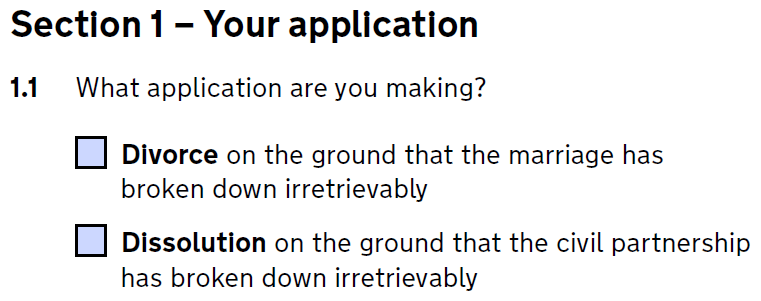
Tick “Divorce on the ground that the marriage has broken down irretrievably”.
(The other option – dissolution – is for ending a civil partnership.)
Question 1.2: Sole or joint application?
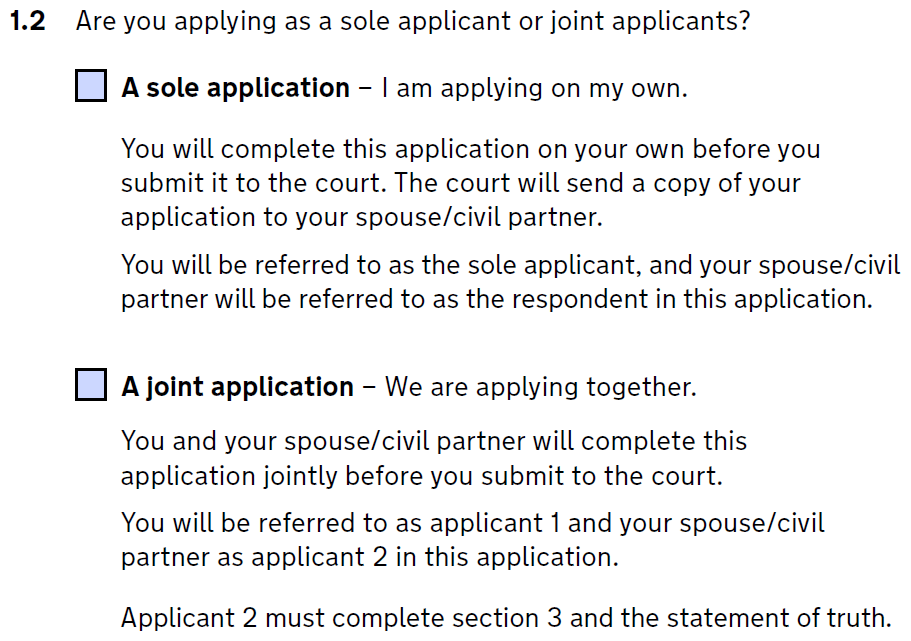
See sole application vs joint application above.
- Tick “A sole application” if you are applying on your own. Your spouse will be referred to as the ‘respondent’ and the court will send them a copy of your application after it is issued.
- Tick “A joint application” if you and your spouse are applying together. You will be ‘applicant 1’ and your spouse will be ‘applicant 2’. Applicant 2 must complete section 3 and sign the statement of truth.
Practical points:
- How you divide your money and property is dealt with separately and should not affect whether you choose a sole or joint application.
Question 1.3 – Supporting documents
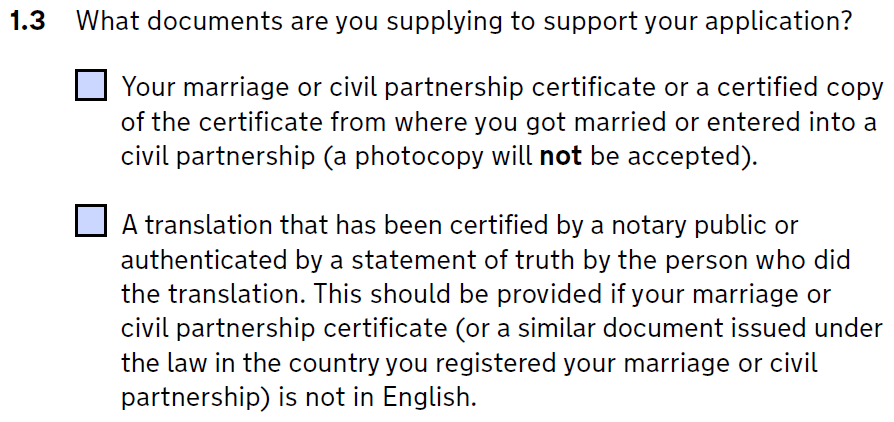
Tick the first box to confirm you are supplying your marriage certificate (an original or certified copy – a photocopy will not be accepted).
If your certificate is not in English, also tick the second box and supply a translation certified by a notary public, or authenticated by a statement of truth from the translator.
Don’t have your certificate? For marriages in England and Wales, you can order a copy from the General Register Office at gro.gov.uk. If the certificate is genuinely unavailable (for example, it is held overseas and cannot be obtained), you will need to make a separate application on form D11 to ask the court for permission to submit it later. This requires an additional court fee.
Section 2 – About you
This section is completed by the sole applicant or, in a joint application, by applicant 1.
Question 2.1 – Your full name
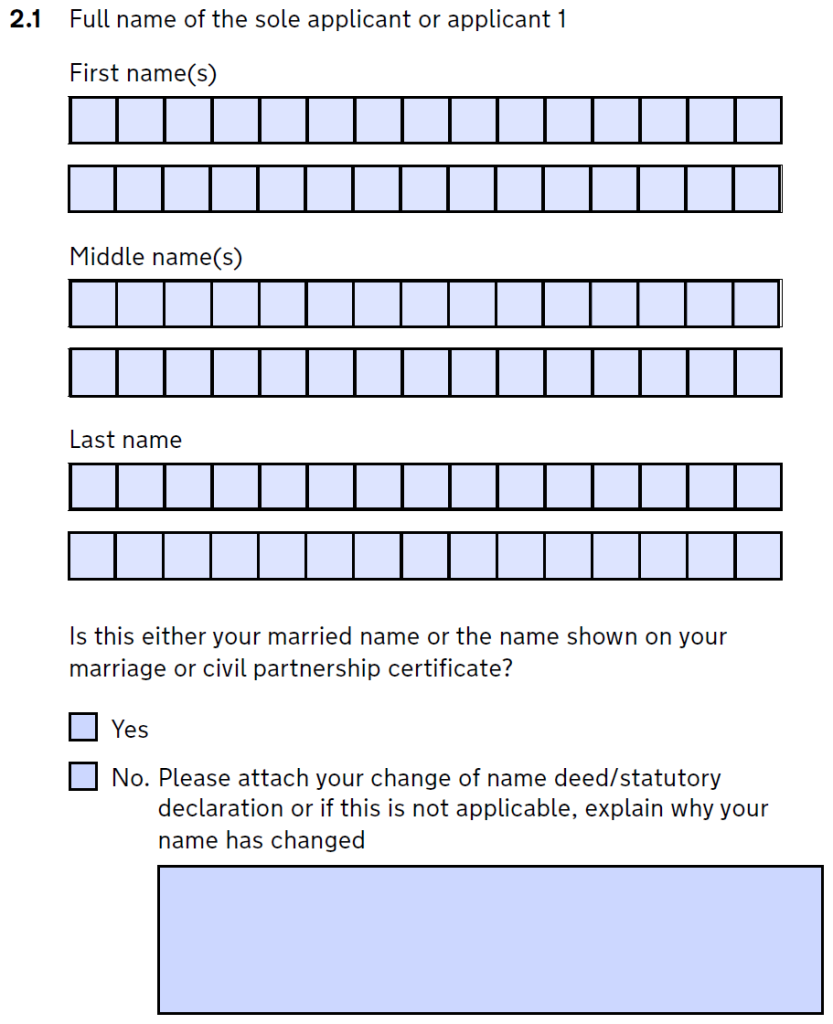
Enter your first name(s), middle name(s), and last name. This does not need to match the name on your marriage certificate – it can be your married name, your maiden name, your spouse’s last name, or a double-barrelled combination.
Then answer the sub-question: “Is this either your married name or the name shown on your marriage or civil partnership certificate?”
- Tick Yes if the name you have entered is the same as on the certificate or is your married name.
- Tick No if your name has changed for any other reason since the marriage (for example, by deed poll). You must then attach a copy of your change of name deed or statutory declaration, or explain in the box provided why your name has changed.
Question 2.2 – Confidential contact details
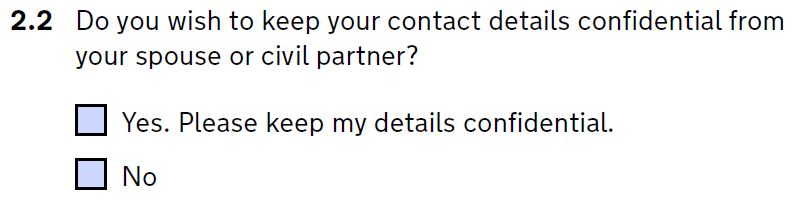
- Tick Yes if you do not want the court to share your address and contact details with your spouse. This is important if there are safety concerns.
- Tick No if you are content for your spouse to see your contact details.
Bear in mind that information on this form will be sent to your spouse unless you tick Yes here.
Question 2.3 – Your address and contact details
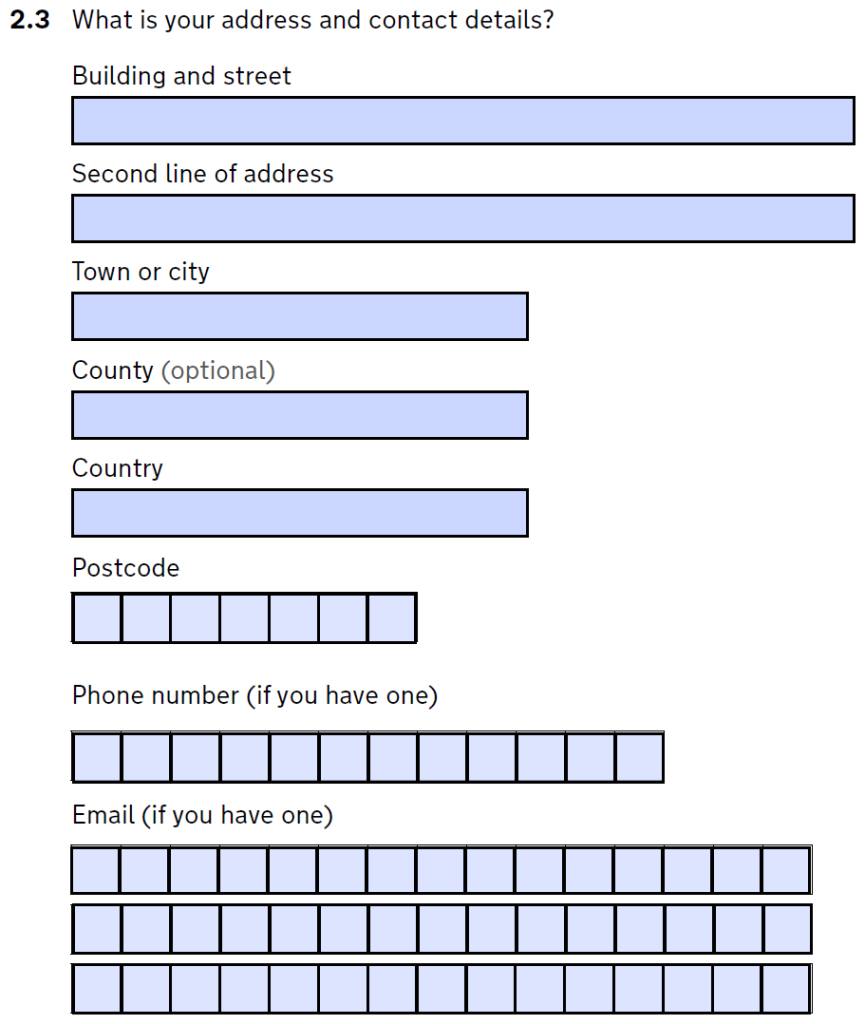
Enter your full postal address. You should provide a home address in the UK if you have one. If you prefer, you can give a UK business address instead. If you want to use an address outside the UK, different rules may apply to how documents are sent to you.
Also provide a phone number and email address if you have them. If you do not provide an email address, the court will send the issued application to your postal address only.
Question 2.4 – Do you have a solicitor?
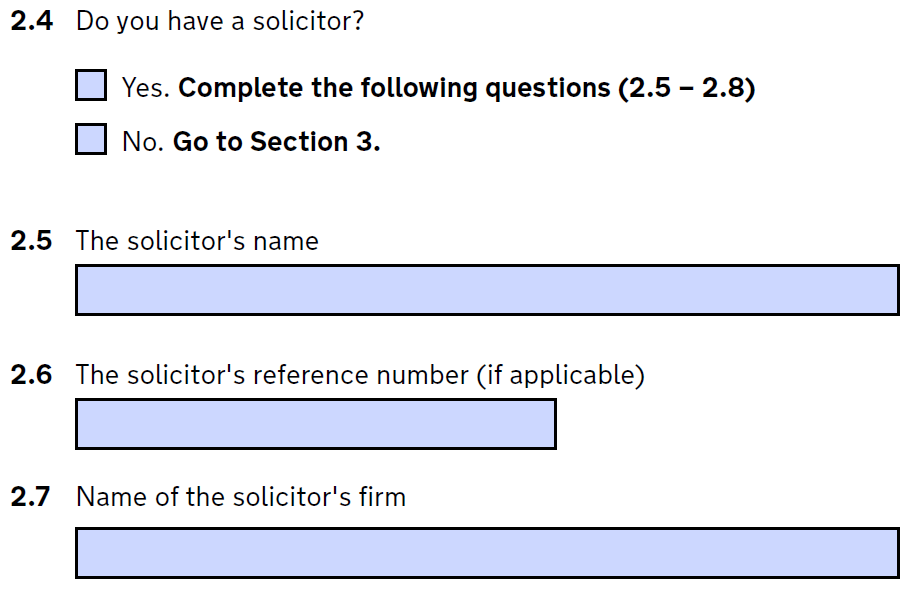
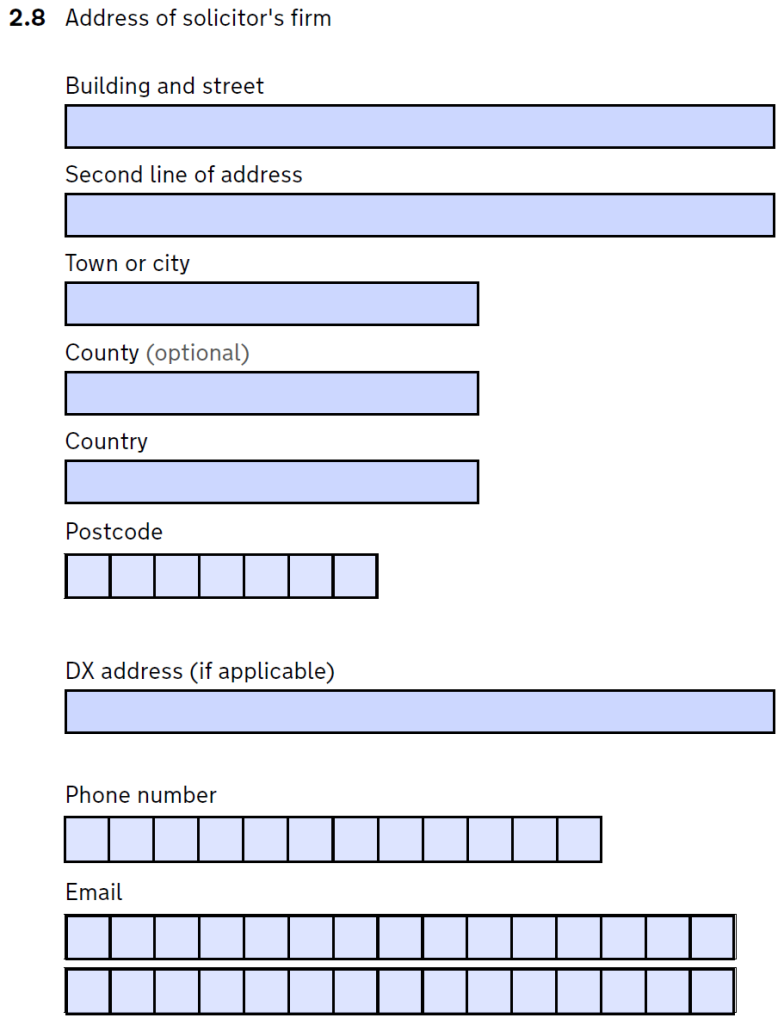
- Tick Yes if a solicitor is advising or representing you. Complete questions 2.5 to 2.8 with their name, reference number, firm name, and the firm’s full address including DX address (if applicable), phone number, and email. The court will then direct correspondence about your case to your solicitor rather than to you personally.
- Tick No if you are representing yourself, and skip to section 3.
Section 3 – About the respondent or applicant 2
Who completes this section:
- Sole application: The applicant fills in the respondent’s details.
- Joint application: Applicant 2 fills in their own details. Applicant 1 skips to section 4.
Question 3.1 – Full name
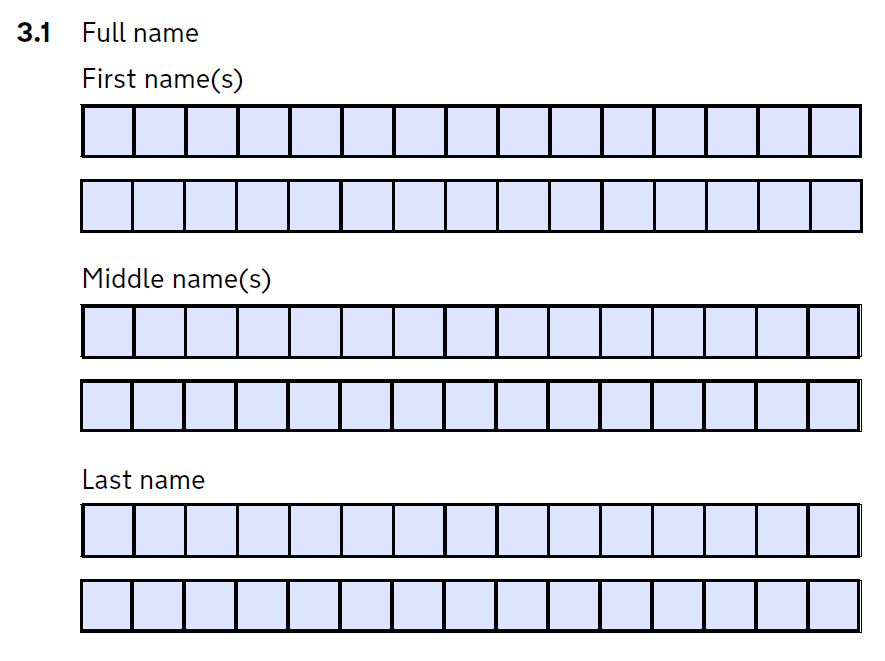
Enter the respondent’s (or applicant 2’s) first name(s), middle name(s), and last name. The same rules apply as in question 2.1 – the name given can differ from the one on the marriage certificate.
Question 3.2 – Is this the married name or the name on the certificate?
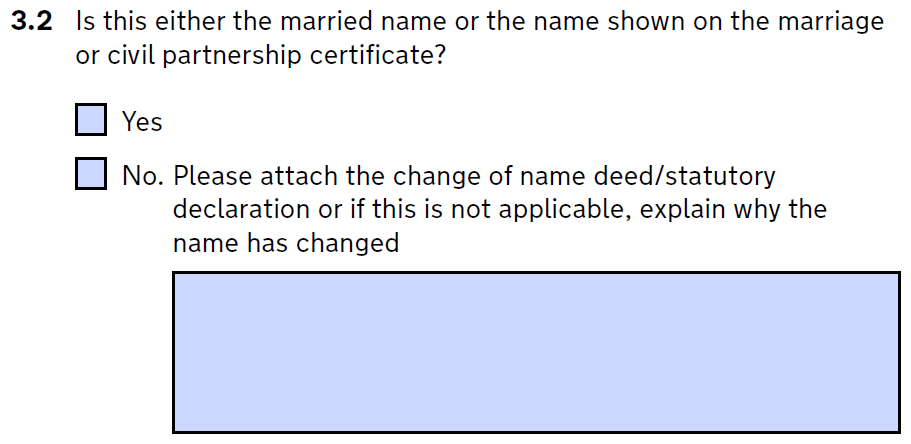
- Tick Yes if it matches.
- Tick No if the name has changed for a reason other than marriage, and attach the relevant change of name deed or provide an explanation.
Question 3.3 – Address and contact details
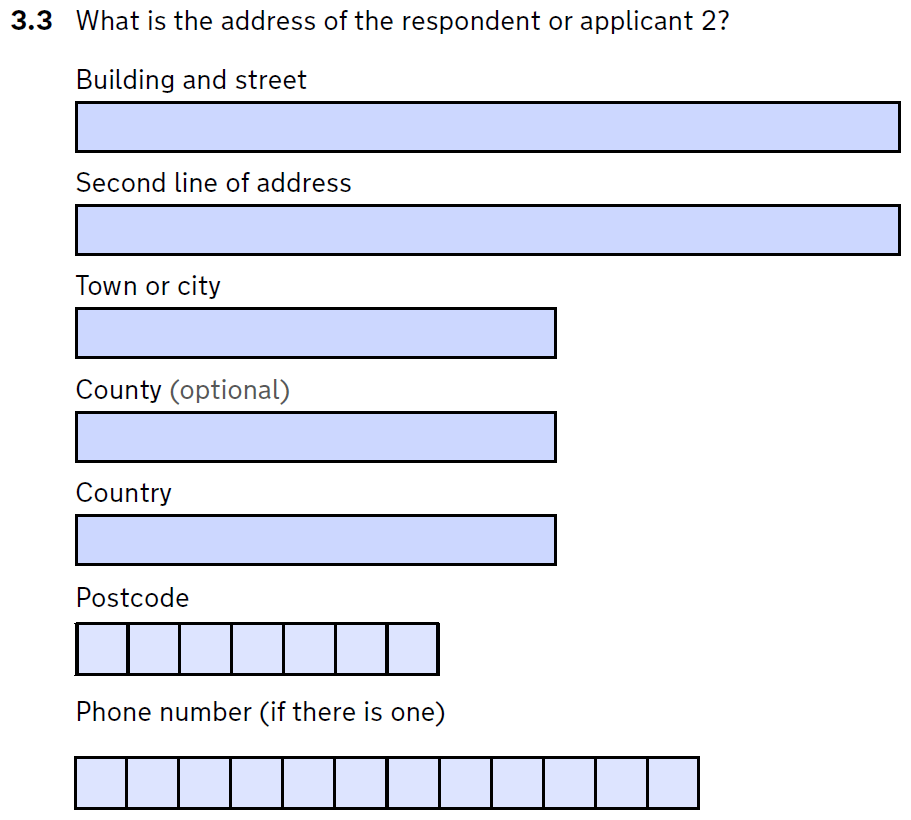
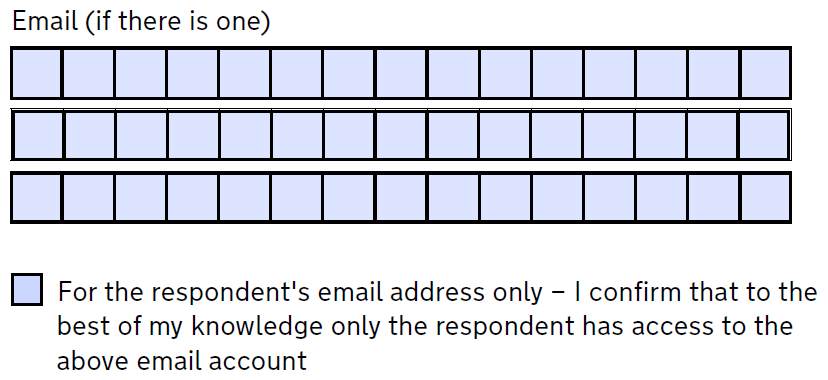
Enter the respondent’s (or applicant 2’s) full postal address, phone number, and email address.
Important points about the email address (sole applications only):
- Use the email address the respondent actively uses for personal emails. Avoid work email addresses, as they may not be private.
- If the respondent has a solicitor instructed to accept service, enter the solicitor’s email address instead.
- The respondent’s email must not be the same as the applicant’s email.
- Tick the confirmation that, to the best of your knowledge, only the respondent has access to the email account.
Where the court serves the application, it will serve it by email with a notice of confirmation sent to the respondent’s postal address.
If this is a joint application: You can now skip to question 3.7.
Question 3.4 – Service outside England and Wales (sole applications only)
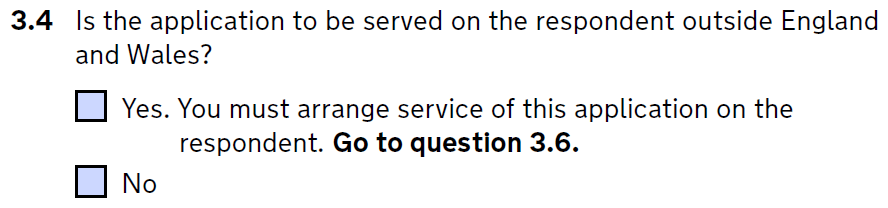
- IGNORE question 3.4 if you are a joint applicant (do not tick either box).
- Tick Yes if the respondent is outside England and Wales. You must then arrange service yourself – the court will not do it for you. Special rules about service may apply, and you should consider seeking legal advice. If you tick yes here, you can now skip to question 3.6.
- Tick No if the respondent is in England and Wales, and continue to question 3.5.
Question 3.5 – How should the court serve the application? (sole applications only)
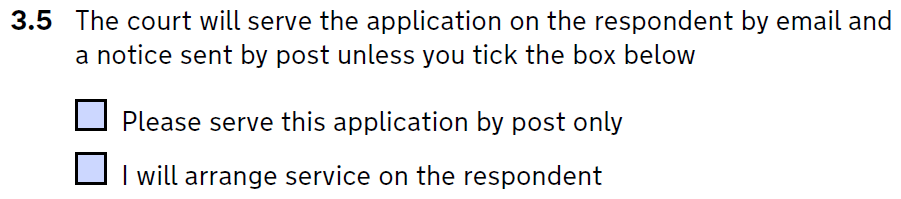
The court will serve the application by email (with a postal notice) unless you indicate otherwise. You have two alternative options:
- IGNORE this question if you are a joint applicant (do not tick either box).
- Tick “Please serve this application by post only” if you want postal service only.
- Tick “I will arrange service on the respondent” if you intend to handle service yourself.
If you are content with the default (email plus postal notice), leave both boxes unticked.
Question 3.6 Alternative address for service
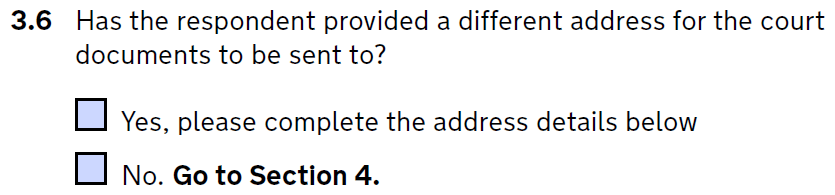
- IGNORE question 3.6 if you are a joint applicant (do not tick either box).
- Tick Yes if the respondent has provided a different address for court documents – this might be a solicitor’s address, but it could also be any other address such as a parent’s home, a work address, or a PO Box.
- Tick No if the court should send documents to the address you already gave at question 3.3. Go to section 4.
Question 3.7 – 3.10 – solicitor details
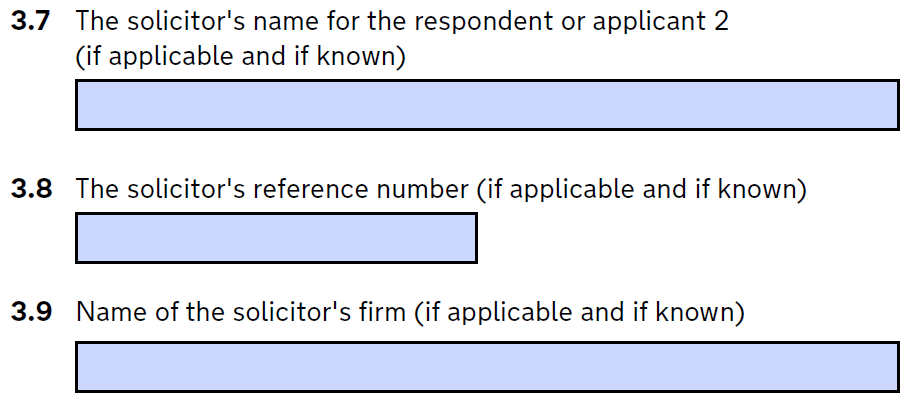
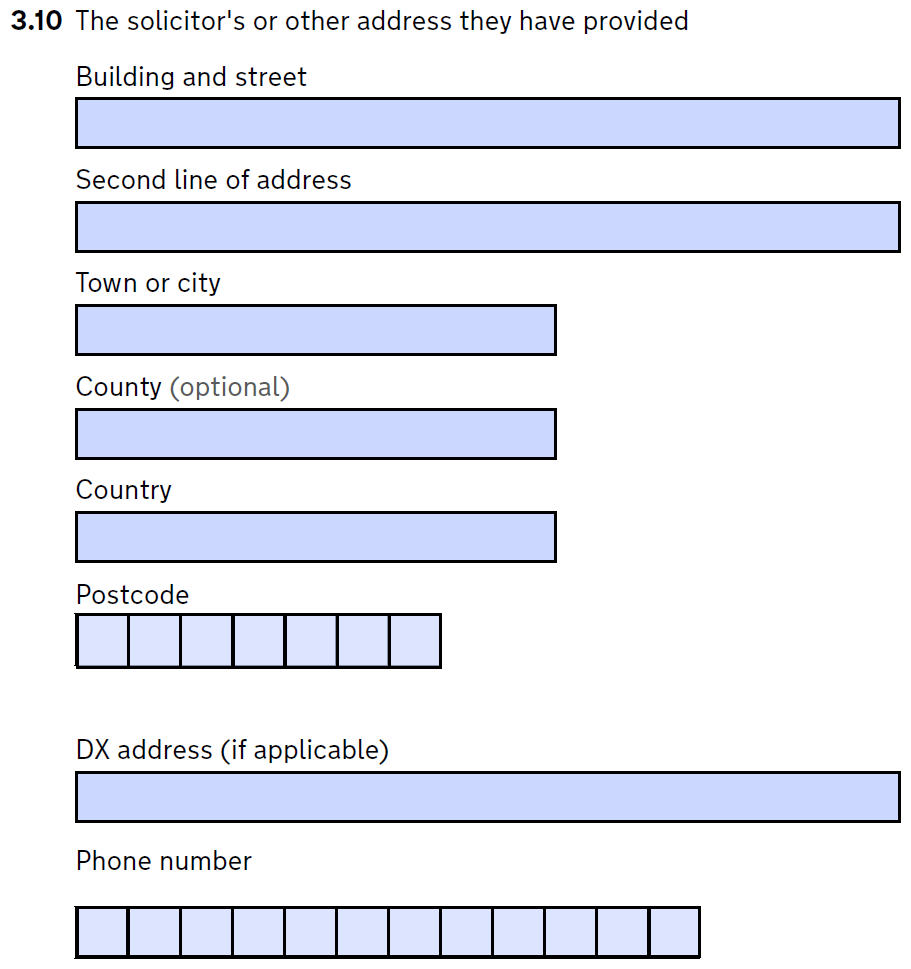
Questions 3.7 – 3.10 are used in two different situations:
- Joint applicants are directed here from question 3.3 to provide applicant 2’s solicitor details (if applicant 2 has a solicitor).
- Sole applicants are directed here from question 3.6 to provide the respondent’s solicitor details or an alternative address for court documents.
Question 3.7 – Solicitor’s name (if applicable and if known): Enter the solicitor’s name if the respondent or applicant 2 has one. If there is no solicitor, leave this blank.
Question 3.8 – Solicitor’s reference number (if applicable and if known): Enter the reference number if known. If the respondent or applicant 2 has no solicitor, leave this blank.
Question 3.9 – Name of the solicitor’s firm (if applicable and if known): Enter the firm name if applicable. If the respondent or applicant 2 has no solicitor, leave this blank.
Question 3.10 – The solicitor’s or other address that the respondent or applicant 2 has provided: Enter the address here, if applicable. The court will send documents to this address. This may be:
- A solicitor’s firm address (if the respondent or applicant 2 has a solicitor), or
- Any other alternative address the respondent has provided for court documents.
If there is no solicitor and no alternative address has been provided, leave this section blank and go to section 4.
Section 4 – Details of the marriage
Question 4.1 – Did the marriage take place outside the UK?

- Tick Yes or No as appropriate.
Question 4.2 – Are you applying to issue without your marriage certificate?
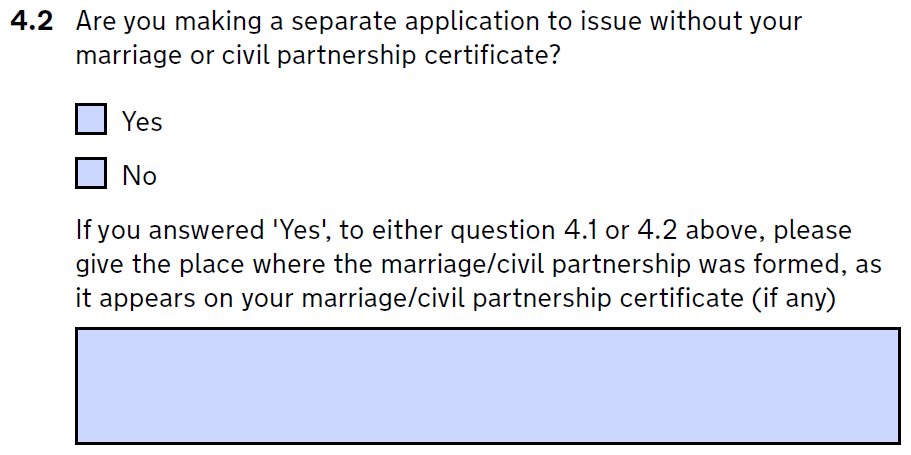
- Tick No in the normal case where you are enclosing the certificate.
- Tick Yes only if you cannot obtain the original or a certified copy. You will need to file a separate D11 application notice and pay an additional court fee.
If you ticked Yes to either 4.1 or 4.2, enter the place the marriage took place as it appears on the certificate (or as you know it, if you do not have the certificate).
Question 4.3 – date of marriage
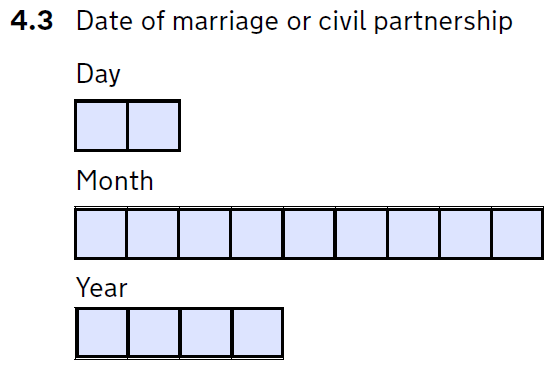
Enter the day, month, and year exactly as shown on your marriage certificate. Remember, you can only apply if at least one year has passed since this date.
Question 4.4 – full names as shown on the certificate
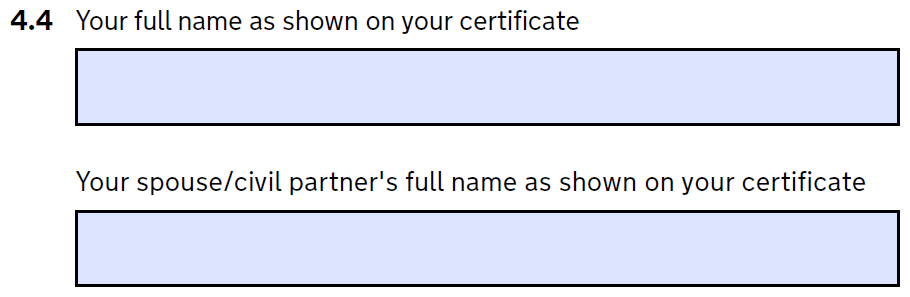
Enter your full name and your spouse’s full name exactly as they appear on the marriage certificate. These may differ from the names given in sections 2 and 3 if either of you has changed your name since the marriage.
Question 4.5 – Are the details on the certificate correct?
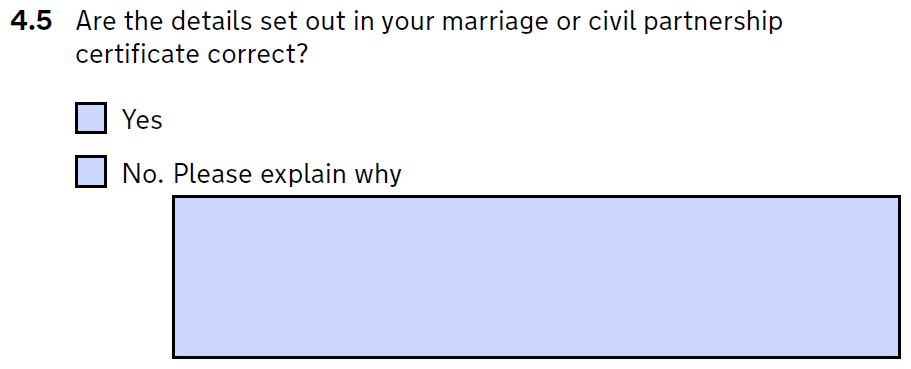
- Tick Yes if everything on your certificate is accurate.
- Tick No if there are errors (for example, a misspelt name or incorrect date), and explain the discrepancy in the box provided.
The court will usually keep your documents and not return them. If you want your certificate back, you will need to apply for its return separately.
Section 5 – Jurisdiction
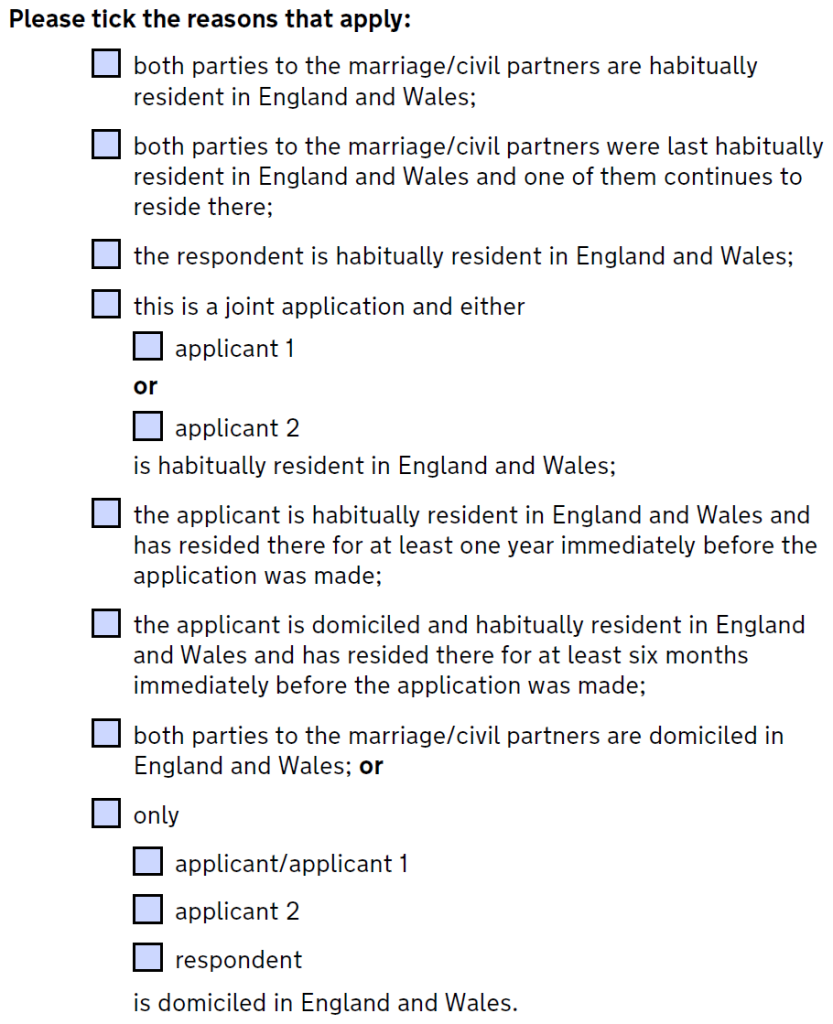
This section establishes why the court in England and Wales has the legal power to deal with your divorce. You need to tick at least one ground that applies to your circumstances.
Understanding the key terms:
- Habitual residence is where your life is mainly based – where you work, own property, have your children in school, and where your main family life takes place. You must be settled there and intend to stay.
- Domicile is the place of your permanent home, or the country to which you intend to return. You acquire a domicile at birth (from your parents) and it changes only if you move to another country and make it your permanent home.
If you were born in England or Wales, have lived here your entire life, and intend to stay, you are very likely both habitually resident and domiciled here.
Question 5.1 – Tick all grounds that apply:
| Ground | When to tick it |
|---|---|
| Both parties are habitually resident in England and Wales | You and your spouse both currently live in England and Wales |
| Both were last habitually resident in England and Wales and one still lives there | You both used to live here and at least one of you still does |
| The respondent is habitually resident in England and Wales | Your spouse lives in England and Wales (sole application) |
| Either applicant 1 or applicant 2 is habitually resident in England and Wales | Joint application where at least one of you lives here — also tick whether it is applicant 1 or applicant 2 |
| The applicant is habitually resident in England and Wales and has lived here for at least one year before the application | You live in England and Wales and have done so for at least 12 months |
| The applicant is domiciled and habitually resident in England and Wales and has lived here for at least six months before the application | You are domiciled here, live here, and have done so for at least 6 months |
| Both parties are domiciled in England and Wales | You and your spouse both have your permanent home in England and Wales |
| Only one party is domiciled in England and Wales | Only one of you is domiciled here – also tick which person (applicant/applicant 1, applicant 2, or respondent) |
For most people living in England and Wales, the first ground (both parties habitually resident) or the fifth ground (applicant habitually resident for at least one year) will apply. Tick every ground that is true.
Question 5.2 – Alternative jurisdiction for civil partnerships and same-sex marriages only
This box is only relevant if none of the grounds in 5.1 apply and you registered your civil partnership or same-sex marriage in England or Wales. It allows the court to assume jurisdiction where it would be in the interests of justice to do so.
If you live outside England and Wales or are unsure which ground applies, seek legal advice. Getting the jurisdiction wrong may cause your application to be rejected.
Section 6 – Statement of irretrievable breakdown
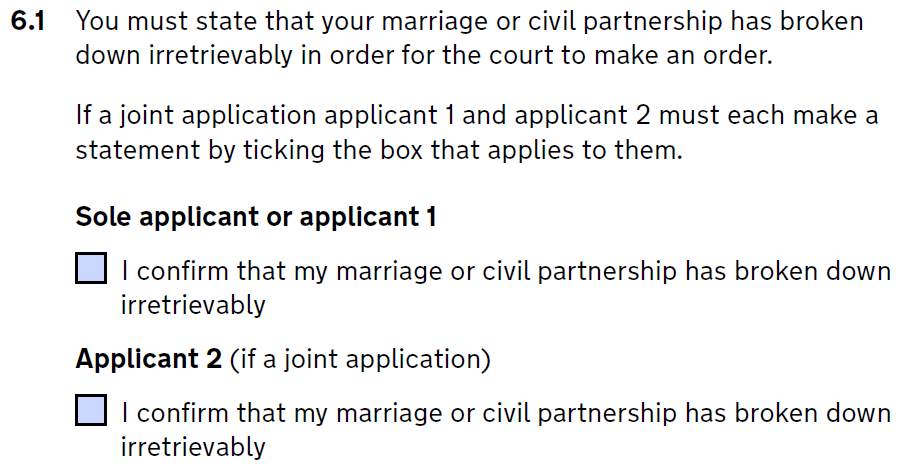
This is the legal basis for your divorce. You simply need to confirm that the marriage has broken down irretrievably. No further details or evidence are required.
- Sole applicant or applicant 1: Tick “I confirm that my marriage or civil partnership has broken down irretrievably.”
- Applicant 2 (joint applications only): Also tick “I confirm that my marriage or civil partnership has broken down irretrievably.”
Both boxes must be ticked in a joint application.
Section 7 – Existing or previous court cases
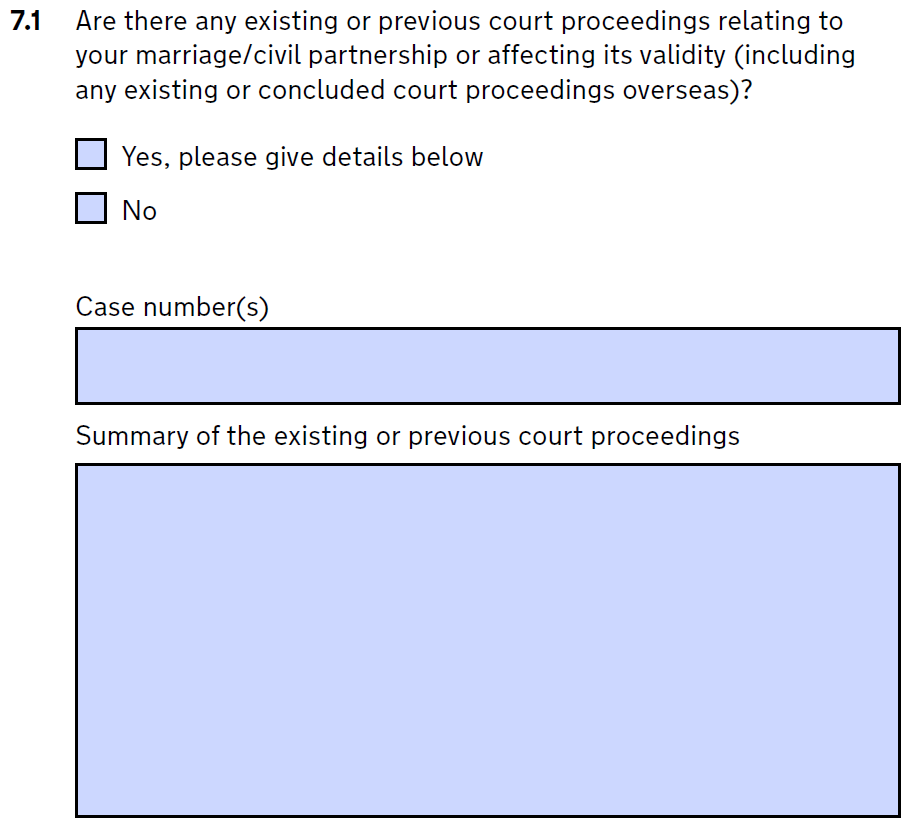
This covers any court proceedings relating to your marriage or its validity, including proceedings overseas. Examples include previous divorce petitions, nullity proceedings, or proceedings in another country.
- Tick No if there are none.
- Tick Yes if there are, and provide the case number(s) and a brief summary of the proceedings in the boxes provided.
In a joint application, both applicants should provide the necessary details together in the same box.
Section 8 – Dividing your money and property
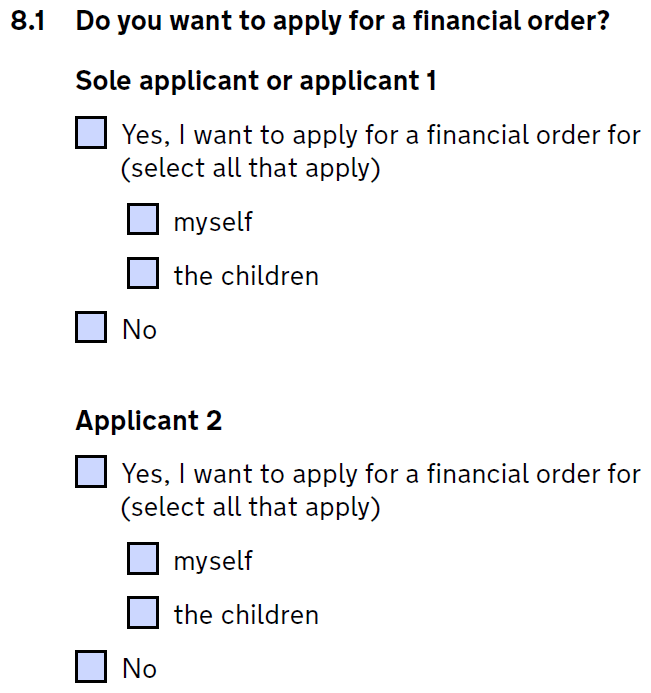
This section asks whether you want to apply for a financial order. Financial orders deal with how your money, property, pensions, and other assets are to be divided. They can include:
- Maintenance pending suit/outcome
- Periodical payments orders
- Secured provision orders
- Lump sum orders
- Property adjustment orders
- Pension sharing, compensation sharing, or attachment orders
You can apply for financial orders for yourself and/or for your children.
Sole applicant or applicant 1:
- Tick Yes and then tick “myself” and/or “the children” as appropriate.
- Tick No if you do not wish to apply.
Applicant 2 (joint applications):
- Tick Yes and then tick “myself” and/or “the children” as appropriate.
- Tick No if you do not wish to apply.
Important points to understand:
- Ticking Yes does not start financial proceedings. It simply records your intention. To formally begin financial proceedings, you will also need to complete a separate application on Form A (or Form A1) and pay an additional court fee.
- Ticking No does not prevent you from applying later – but once you remarry or form another civil partnership, you lose the right to apply for most financial orders (except pension sharing or pension compensation sharing orders).
- You may be able to resolve financial matters outside of court through mediation or negotiation. If you agree on how assets should be split and want to make this legally binding, you can apply for a financial order by consent.
- Child maintenance is usually dealt with by agreement between the parties or by the Child Maintenance Service, not the court.
- If you are unsure, it is generally recommended that you tick Yes. This preserves your ability to seek financial orders through the court as part of the divorce proceedings. You can seek legal advice before deciding whether to pursue them.
Section 9 – Summary of what is being applied for
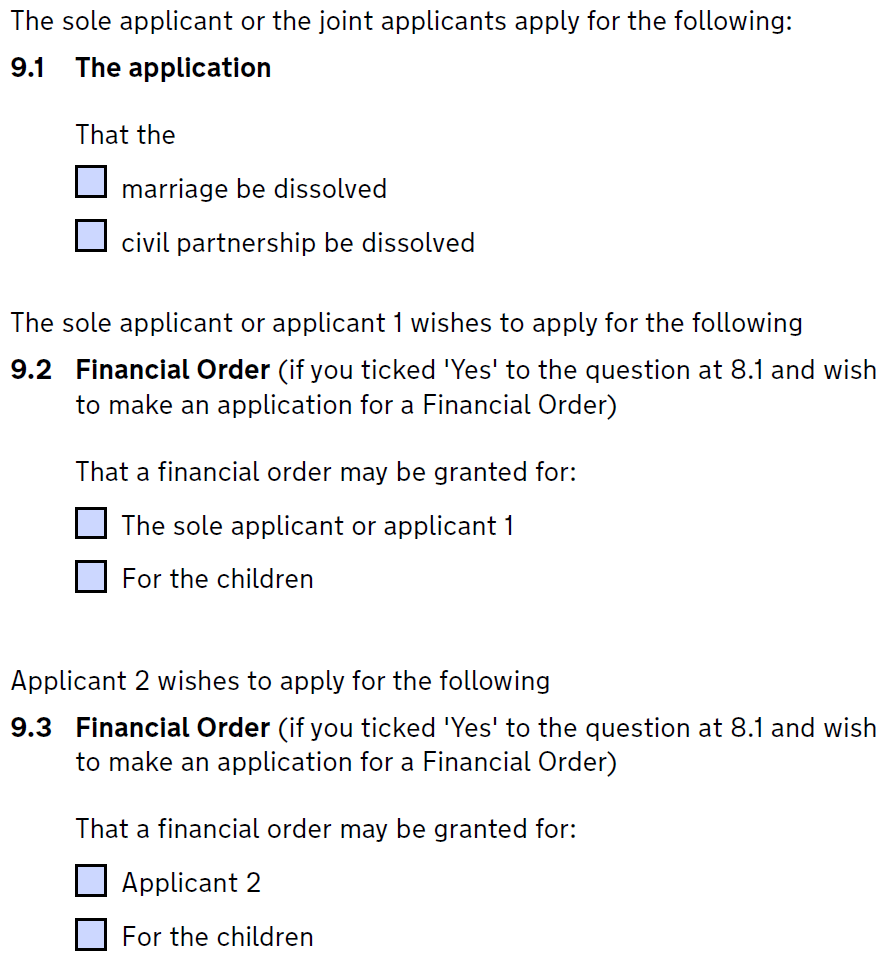
This section summarises what you are asking the court to do. It must be consistent with your answers in sections 1 and 8.
Question 9.1 – The application
Tick “marriage be dissolved” (for a divorce).
Question 9.2 – Financial order for sole applicant or applicant 1
If you ticked Yes at question 8.1, tick the boxes that apply:
- “The sole applicant or applicant 1” – if you want a financial order for yourself; and/or
- “For the children” – if you want a financial order for the children.
If you ticked No at question 8.1, leave this blank.
Question 9.3 – Financial order for applicant 2 (joint applications only)
If applicant 2 ticked Yes at question 8.1, tick the boxes that apply:
- “Applicant 2” – if applicant 2 wants a financial order for themselves; and/or
- “For the children” – if applicant 2 wants a financial order for the children.
Section 10 – Statement of truth
This is where you (and applicant 2 in a joint application) confirm that everything in the form is true. The court will return your application if the statement of truth is not signed and dated.
Question 10.1 – Sole applicant or applicant 1
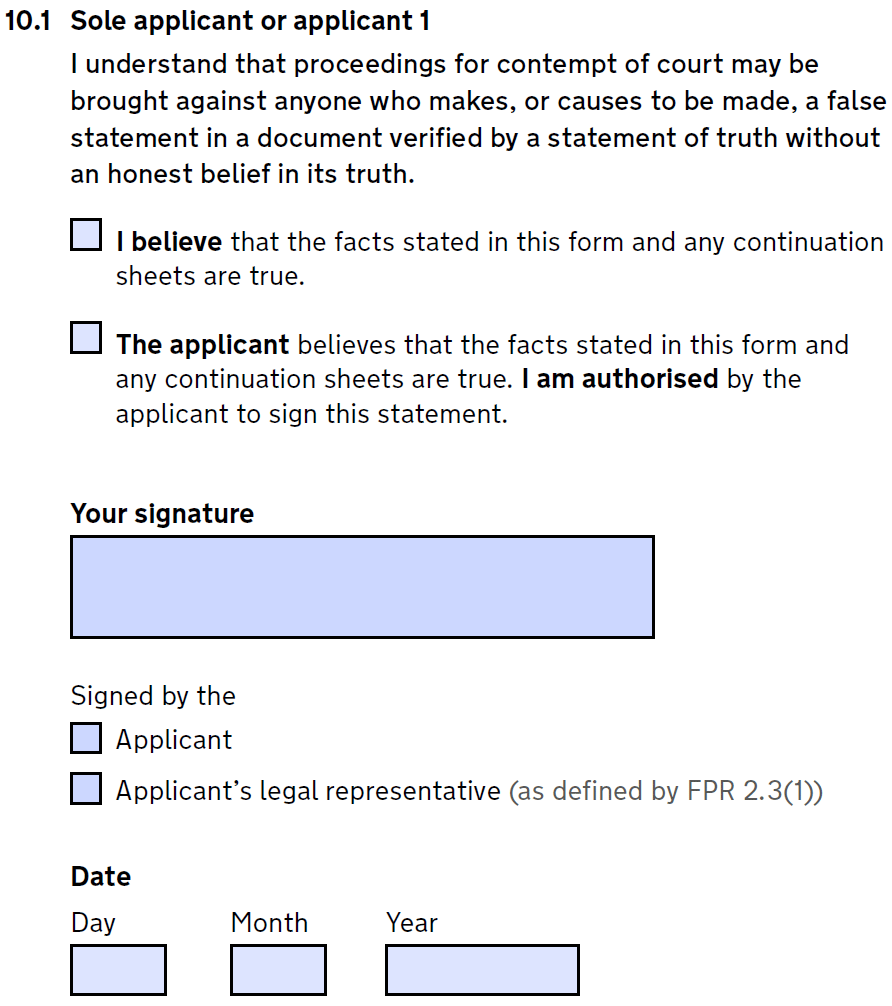
- If you are signing the form yourself, tick “I believe that the facts stated in this form and any continuation sheets are true.”
- If a solicitor is signing on your behalf, tick the second option instead (“The applicant believes that the facts stated in this form and any continuation sheets are true. I am authorised by the applicant to sign this statement.”).
Then:
- Sign the form.
- Tick whether it is signed by the Applicant or the Applicant’s legal representative.
- Enter the date (day, month, year).
- Print the full name of the person signing.
- If a solicitor is signing, enter the firm name and position held.
Question 10.2 – Applicant 2 (joint applications only)
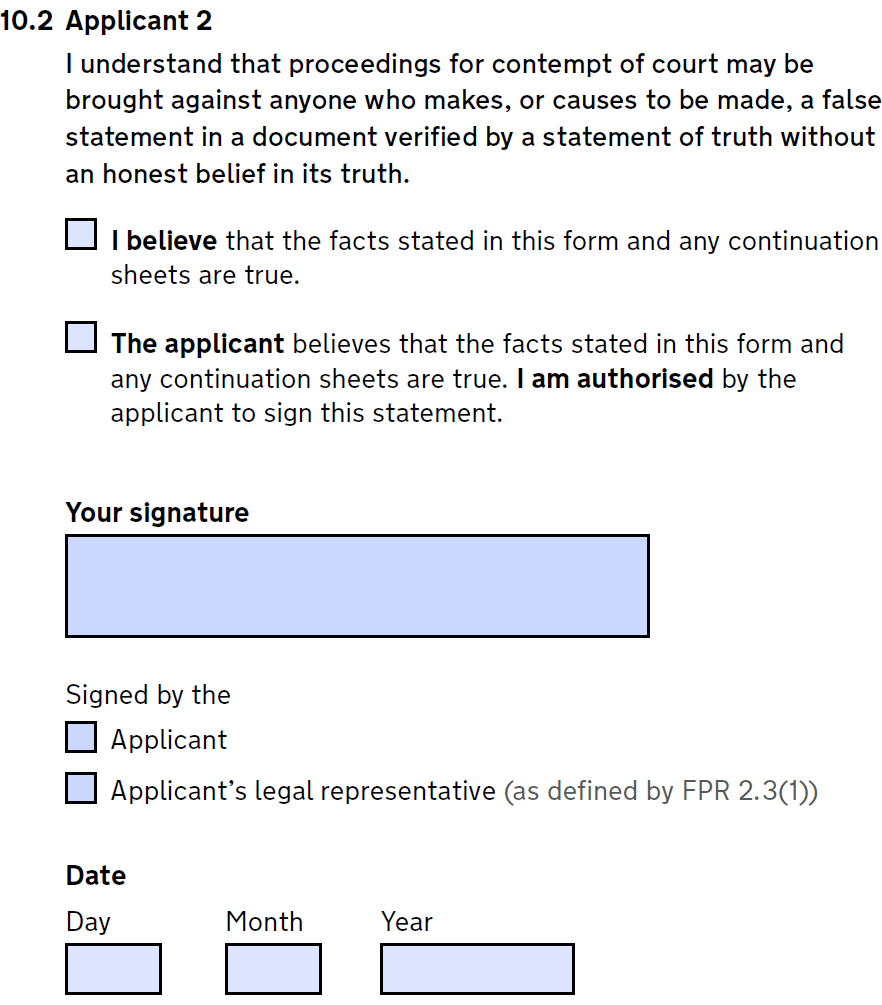
Applicant 2 must complete this section in exactly the same way as described above for 10.1. Both applicants must sign and date the statement of truth before the application is submitted.
Warning: Proceedings for contempt of court may be brought against anyone who makes, or causes to be made, a false statement verified by a statement of truth without an honest belief in its truth.
Court fee section
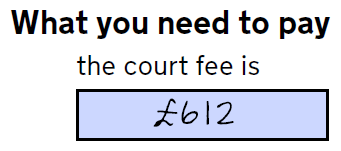
This final section of the form deals with payment. In the box, write the fee due. You can find the latest fees here. Currently (at 1st April 2026) the fee to file an application for a divorce, nullity or civil partnership dissolution is £612. You can find out about getting help with fees here.
How to indicate your payment method:
If you are eligible for Help with Fees, tick “I have not included payment because” and then either:
- Tick “I have applied for Help with Fees online” and enter your HWF reference number (which starts with HWF), or
- Tick “I am applying for Help with Fees” and attach the completed form EX160.
If you are paying by debit or credit card, tick the relevant box and choose whether:
- You will pay over the phone (the court will call you), or
- You want the court to email you payment details (provide your email address).
The court will contact you within 28 days of receiving your application. If you have not heard from them in that time, call 0300 303 0642 (Monday to Friday, 10am to 6pm).
If you are paying by cheque or postal order, tick that box and make it payable to ‘HMCTS’.
Joint applications: Both applicant 1 and applicant 2 must separately qualify for Help with Fees, or the full fee must be paid by one applicant. You can decide between you how to share the cost and who makes the payment.
Checklist: what to send with your postal application
Before posting, confirm you have:
- The completed and signed D8 form
- Your original marriage certificate or a certified copy (not a photocopy)
- A certified English translation of the certificate, if applicable
- Your court fee payment (cheque payable to ‘HMCTS’), or your HWF reference number entered on the form, or a completed EX160 form attached
- Any change of name deed or statutory declaration, if your name has changed since the marriage for reasons other than the marriage itself
- A D11 application notice if you are applying without your marriage certificate (plus additional fee)
Post everything to:
HMCTS Divorce and Dissolution Service
PO Box 13226
Harlow
CM20 9UG
Helpline: 0300 303 0642 (Monday to Friday, 10am to 6pm)
Email: [email protected]
Cite this work:
To cite this resource, please use the following reference:
National Case Law Archive, 'How to get a divorce in England and Wales' (LawCases.net, April 2026) <https://www.lawcases.net/practice/how-to-get-a-divorce-in-england-and-wales/> accessed 2 April 2026
Articles and content on this site are for informational purposes only and do not constitute legal advice. Do not rely solely on this information.

